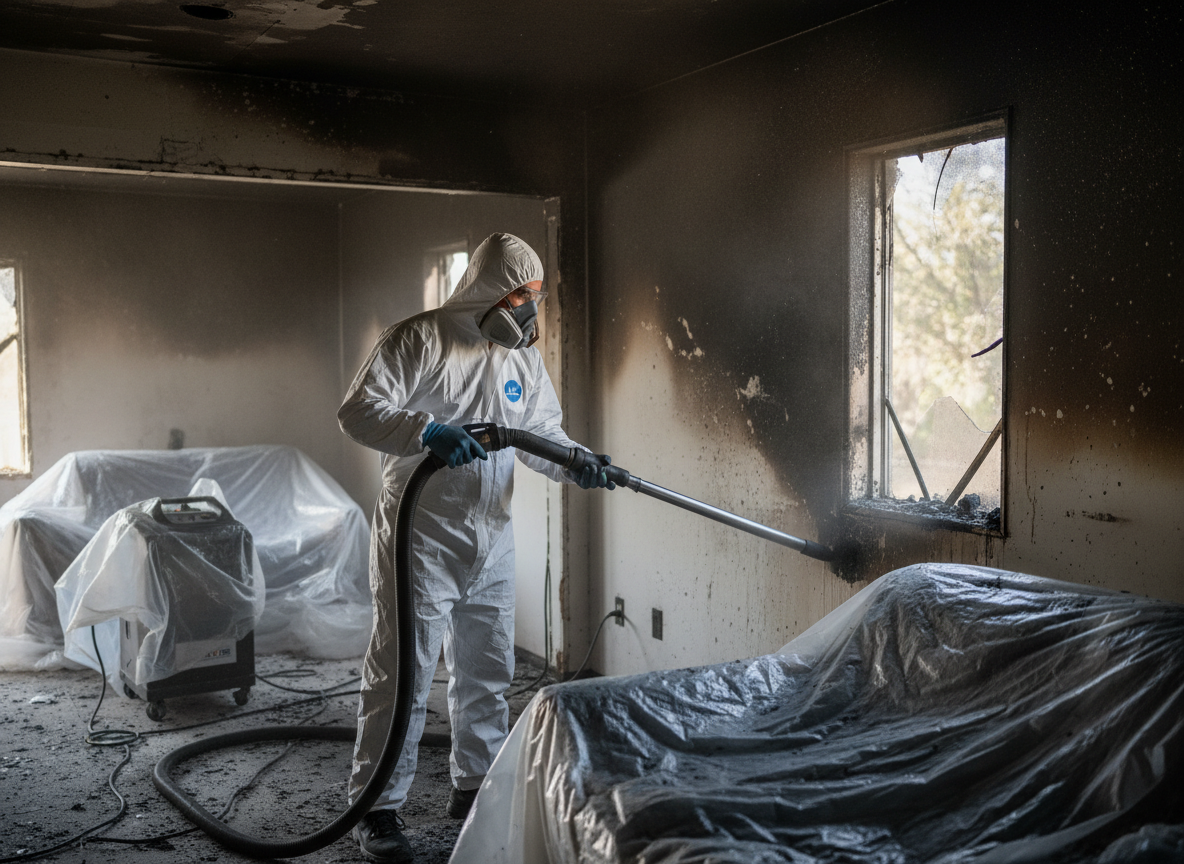
Soot from structure fires in Porter Ranch settles differently due to the area's Mediterranean climate with hot dry summers. Low humidity lets fine carbon particles travel farther through ductwork and settle on drywall, insulation, and hardwood floors common in homes built near Porter Ranch Town Center and West Porter Ranch. Acidic soot bonds quickly to porous materials, requiring pH-neutral cleaners and HEPA filtration to avoid pushing residue deeper into surfaces. Technicians at our 19765 Rinaldi St location respond 24/7 because summer winds can carry smoke from nearby hills into neighborhoods fast.
In Los Angeles County homes around Northridge and Chatsworth, older HVAC systems and attic insulation trap soot that later re-circulates when temperatures rise. We test surfaces with pH strips before cleaning and often remove and replace affected insulation rather than risk incomplete extraction. Dry summer conditions also mean less moisture to weigh down particles, so we use air scrubbers with activated carbon throughout the property, including garages and attached spaces that many Porter Ranch homes feature.
Sesnon Trail terrain and surrounding brush increase the chance of outdoor smoke entering homes through vents and windows during regional fires. Soot on concrete driveways and stucco exteriors requires different methods than interior drywall to prevent etching. We document every room with photos and moisture readings so homeowners see exactly which materials were affected and why certain items cannot be salvaged without visible residue returning later.
Technician insight
In Porter Ranch the thing that catches most people out with soot removal is how fast dry summer air lets particles travel through open floor plans and into attics above West Porter Ranch homes. Homeowners often try wiping surfaces themselves and just smear acidic residue into the drywall.
Soot in HVAC After Nearby Brush Fire
Smoke from a fire near Sesnon Trail entered a Porter Ranch home through attic vents. We found soot coating the evaporator coils and inside supply ducts. We isolated the system, cleaned coils and ducts with HEPA equipment, and replaced contaminated insulation before running the AC to confirm no re-soiling.
How it works
- 1
Initial Assessment
We inspect all affected rooms, test surfaces for pH levels, and document soot depth in HVAC, attics, and living spaces.
- 2
Containment Setup
Plastic barriers and negative air machines isolate the work area to keep particles from spreading to unaffected parts of the Porter Ranch home.
- 3
Surface Cleaning
HEPA vacuums and pH-adjusted solutions remove soot from drywall, wood, and concrete without driving residue deeper.
- 4
Air Purification
Activated carbon filters and air scrubbers run until particle counts return to normal levels throughout the property.
- 5
Final Verification
We retest surfaces and run the HVAC to confirm no re-soiling occurs before returning the home to the owner.
Pricing
Cost depends on square footage affected, HVAC involvement, and whether insulation or drywall must be removed.