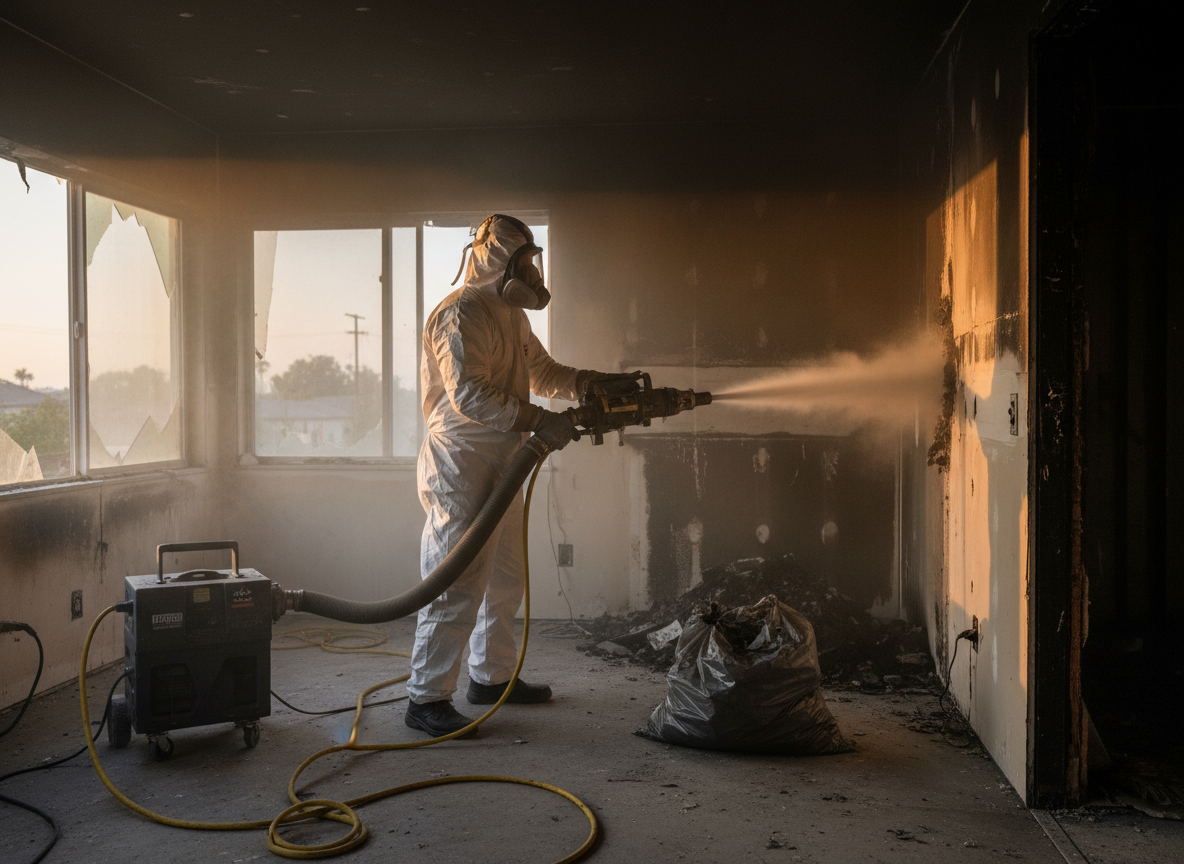
In Porter Ranch homes, smoke from structure fires travels through HVAC systems and settles into porous materials like drywall, insulation, and carpet padding common in 1980s-2000s builds around Porter Ranch Town Center. Hot dry summers accelerate soot adhesion to surfaces, making standard cleaning insufficient and requiring specialized alkaline solutions and HEPA filtration to neutralize acidic residues that can corrode metal fixtures over time.
Edge cases arise near Sesnon Trail where wind patterns carry smoke into West Porter Ranch neighborhoods, depositing fine particulates deep into attics and wall cavities. Los Angeles County building codes require verification that all affected materials meet fire safety standards post-remediation, so we test pH levels on concrete slabs and wood framing before sealing to prevent recurring odor issues in the Mediterranean climate.
Homeowners often overlook smoke migration into electrical boxes and behind baseboards in single-story ranch-style properties typical here. We use air scrubbers with activated carbon for 48-72 hours minimum, monitoring humidity to avoid secondary mold growth during the dry season when indoor air can become overly arid.
Proper documentation of pre-existing conditions in Chatsworth-adjacent areas helps differentiate fire-related soot from urban pollution layers that accumulate on stucco exteriors.
Technician insight
In Porter Ranch, the thing that catches most people out with smoke remediation is how the dry summer winds push soot into those hillside homes near Sesnon Trail, settling it behind outlets and in the stucco voids that 90s builds here all have. Homeowners try wiping it themselves and just smear it deeper into the drywall paper.
Smoke in West Porter Ranch Attic
A kitchen fire sent smoke upward through shared vents into the attic of a 1998 home near Porter Ranch Town Center. We found heavy soot coating on insulation batts and rafters that standard fans had missed. After containment, targeted cleaning, and carbon treatment we cleared the space without disturbing the existing roof structure.
How it works
- 1
Initial Assessment
Inspect all affected rooms, HVAC, and hidden cavities for smoke penetration depth using moisture meters and visual soot mapping.
- 2
Containment Setup
Isolate impacted zones with plastic barriers and negative air machines to prevent cross-contamination to unaffected areas like the garage or attic.
- 3
Soot Removal
Apply specialized cleaners to hard surfaces and extract residues from fabrics and carpets without spreading particles.
- 4
Odor Neutralization
Deploy ozone or hydroxyl generators followed by ventilation to break down embedded smoke molecules in porous materials.
- 5
Final Clearance
Conduct air quality testing and visual inspection to confirm no lingering odors before returning the property to normal use.
Pricing
Costs depend on square footage affected, depth of smoke penetration into cavities, and whether HVAC cleaning is required.