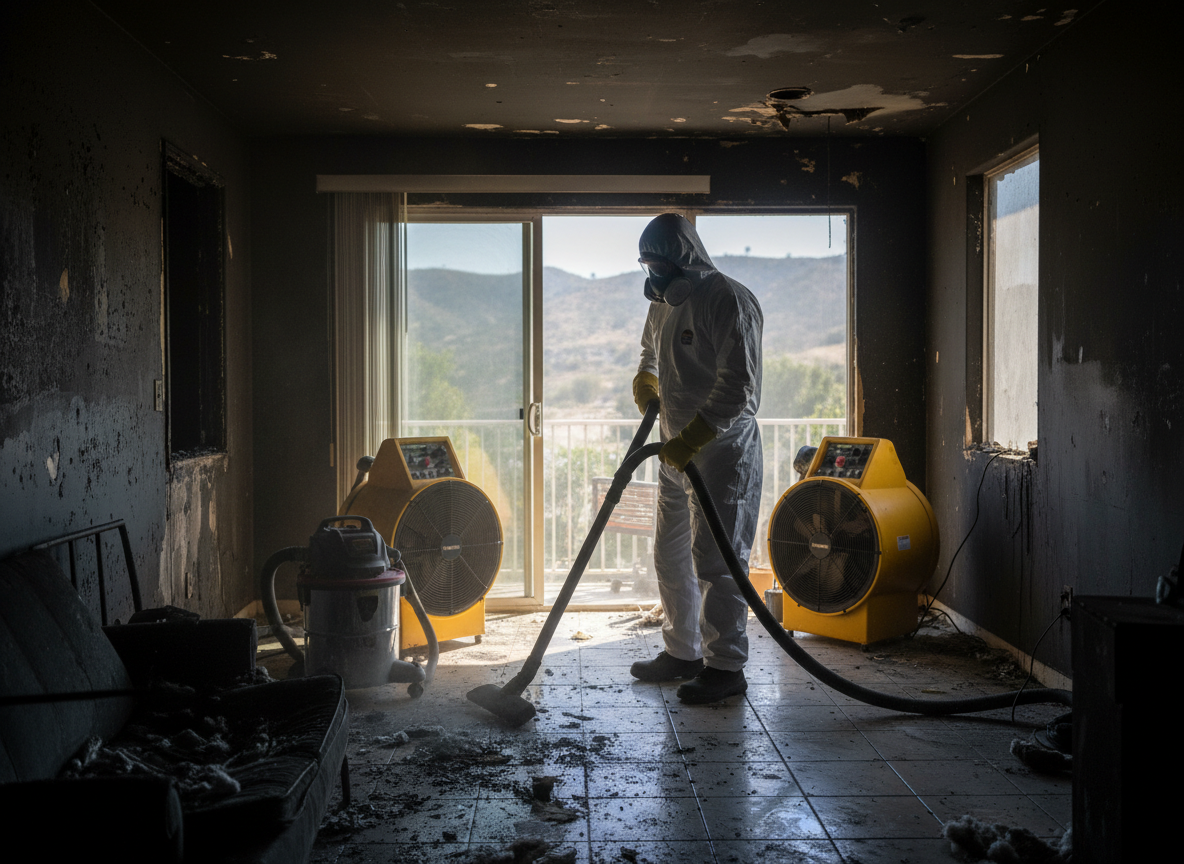
Porter Ranch homes in West Porter Ranch and near the Town Center often feature newer construction with extensive drywall and HVAC systems that allow smoke to travel through shared walls and ductwork during tenant fires. Mediterranean climate conditions with hot dry summers intensify soot adhesion on surfaces and increase the risk of hidden residue in attics and wall cavities. Los Angeles County regulations require proper ventilation and disposal protocols during cleanup to avoid cross-contamination between units, especially when multiple tenants share common areas.
Cleanup crews must address tenant-specific challenges such as personal belongings, leased appliances, and landlord coordination for access. Edge cases include fires starting in kitchens or balconies that spread via dry vegetation near Sesnon Trail, leaving oily residue that standard methods miss. Warnings apply to electrical systems and insulation in Chatsworth-adjacent properties where older wiring can complicate safe restoration without triggering additional code inspections.
Effective tenant fire damage cleanup requires separating salvageable items early, using HEPA filtration to capture fine particles, and neutralizing odors before reoccupancy. Delaying work in dry summer conditions allows soot to embed deeper into carpets and fabrics common in Porter Ranch rentals. Coordination with property managers ensures compliance with local habitability standards while minimizing displacement time for tenants.
Technician insight
In Porter Ranch, the thing that catches most people out with tenant fire damage cleanup is how the hot dry summers let fine soot travel through the newer stucco homes near the Town Center and settle in wall cavities that tenants never see until we open them up.
West Porter Ranch Kitchen Fire
A tenant cooking fire sent smoke through the HVAC into two adjacent units. We found heavy residue on drywall behind cabinets and in shared ductwork. Containment and targeted cleaning restored the spaces without full gutting, allowing tenants back within a week.
How it works
- 1
Initial Assessment
Technicians inspect all affected units for smoke paths, test air quality, and document tenant contents and structural impact.
- 2
Containment and Safety
Set up barriers and negative air pressure to isolate the unit, secure utilities, and protect adjacent tenant spaces from cross-contamination.
- 3
Soot and Residue Removal
Apply specialized cleaning agents to walls, ceilings, and HVAC components while removing unsalvageable tenant items per owner direction.
- 4
Odor Neutralization and Final Verification
Treat remaining odors with ozone or thermal fogging, then conduct clearance testing before returning the unit to habitable condition.
Pricing
Costs depend on square footage affected, smoke density, and whether HVAC cleaning or contents handling is required.