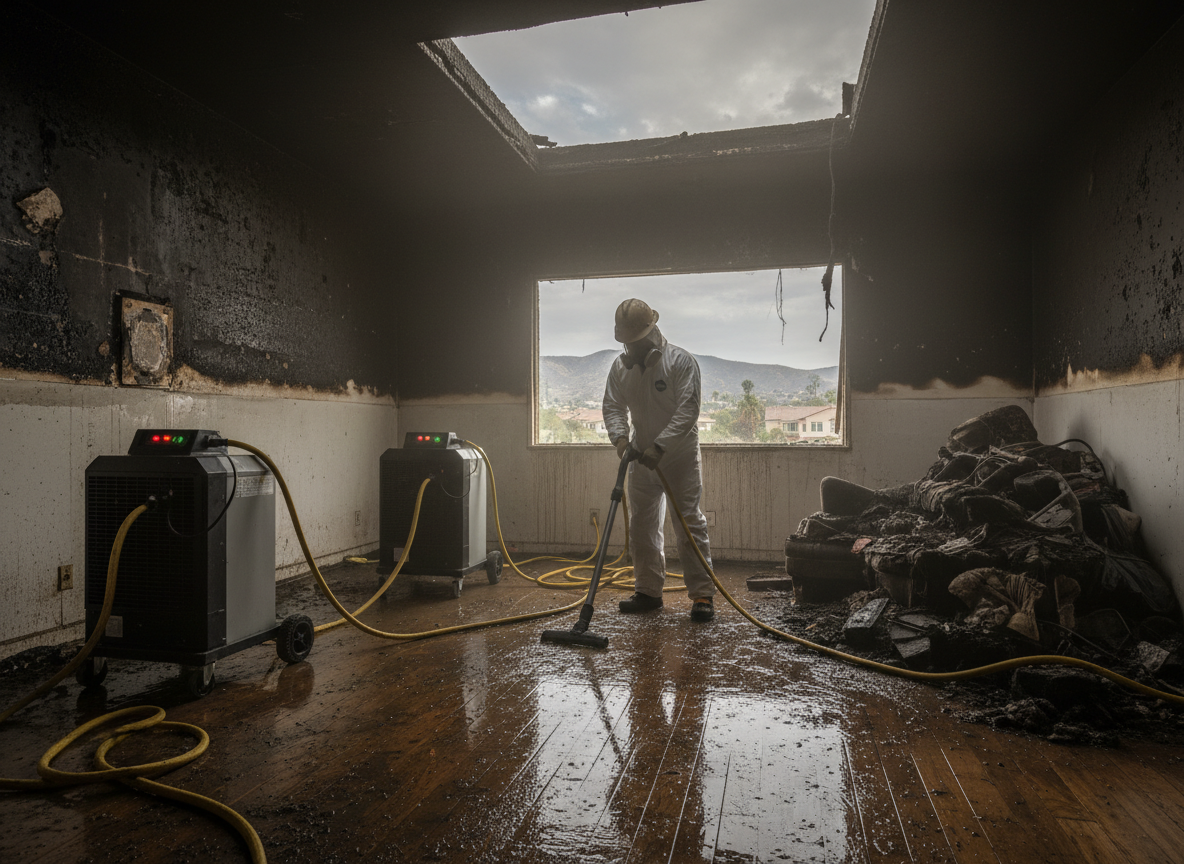
Porter Ranch homes near the Town Center and along West Porter Ranch roads often sit on slopes that channel runoff after fires. Hot dry summers leave vegetation tinder-dry, so when flames reach structures the resulting ash and soot mix with later winter rains to create acidic water that etches concrete foundations and corrodes copper lines. Crews must neutralize residues before drying begins or hidden corrosion appears months later in Northridge-adjacent properties.
Many Porter Ranch houses built in the 1980s and 1990s have stucco exteriors over wood framing that traps moisture once fire suppression water enters wall cavities. Removing baseboards reveals how water migrates along the slope toward Sesnon Trail, saturating subfloors that sit above compacted fill. Technicians cut inspection openings at each joist bay rather than guessing from surface readings, because the local soil holds heat and slows natural evaporation.
After initial extraction, dehumidifiers must run longer in Chatsworth-border homes because the same Santa Ana winds that spread fire also lower indoor humidity unevenly, leaving pockets of damp insulation behind HVAC returns. Skipping these micro-zones allows mold to colonize within days once temperatures drop at night.
Technician insight
In Porter Ranch, the thing that catches most people out with Fire and flood restoration is how the same slopes that funneled embers during summer winds now funnel acidic runoff into crawl spaces once rains hit, especially on homes west of Rinaldi Street where older fill dirt never drained well.
Slope Home After Wind-Driven Fire
A Porter Ranch house backing onto open space took radiant heat through a window and later received heavy hose water. We found ash-laden water had pooled against the rear foundation and wicked into the subfloor toward the garage. Extraction and neutralization prevented the slab from etching, and the owners moved back in after targeted drying of the lower level only.
How it works
- 1
Site Assessment
Walk every affected room and exterior slope, mapping water paths created by fire hoses and noting ash deposits that will acidify standing water.
- 2
Containment and Extraction
Set up negative air and remove bulk water before it migrates downhill toward neighboring lots on the same ridge.
- 3
Neutralization and Cleaning
Apply pH-balanced rinses to soot-covered surfaces, then remove charred framing that can re-ignite or off-gas during drying.
- 4
Drying and Monitoring
Place sensors in wall cavities and run commercial equipment until moisture readings match pre-loss levels recorded on similar Porter Ranch builds.
- 5
Rebuild and Final Walk
Replace affected drywall and flooring, then verify airflow through the home's original vents to prevent future condensation issues.
Pricing
Pricing is based on the square footage affected and the number of hidden wall cavities that require opening; every Porter Ranch job starts with a no-obligation walkthrough.