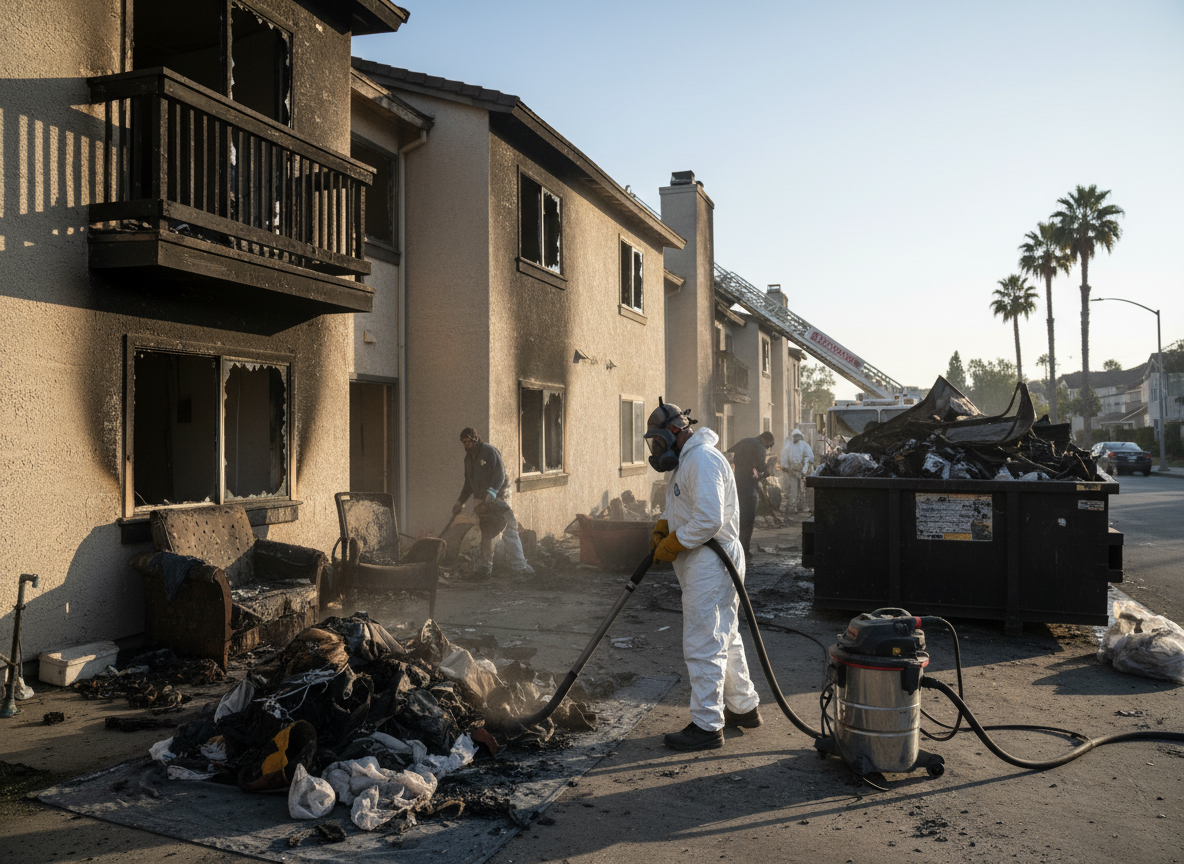
Apartment fires in Porter Ranch often involve rapid smoke migration through shared HVAC ducts and wall cavities in buildings near Rinaldi Street and the Town Center. Hot dry summers accelerate soot adhesion to drywall, carpet and cabinetry, requiring HEPA vacuuming followed by chemical neutralization rather than simple wiping. Multi-unit layouts create edge cases where smoke travels vertically into units above the fire origin, especially in complexes with older ventilation shared with nearby Northridge and Chatsworth properties.
Los Angeles County building codes require verification that fire-rated separations remain intact after cleanup, so technicians must document any compromised drywall or insulation before reassembly. Residues from synthetic furnishings common in newer Porter Ranch apartments release corrosive gases that pit metal fixtures and electronics if not addressed within the first 48 hours. Terrain around Sesnon Trail means some hillside apartments face added challenges with wind-driven smoke infiltration during Santa Ana conditions.
Cleanup crews address both visible char and invisible odor molecules trapped in porous materials like acoustic ceiling tiles and insulation. In West Porter Ranch apartments, crews frequently encounter water used by firefighters that pools in slab-on-grade foundations, creating secondary mold risks during the Mediterranean dry season when humidity spikes indoors.
Technician insight
In Porter Ranch, the thing that catches most people out with Apartment fire cleanup is how fast smoke moves through the shared return-air ducts in buildings along Rinaldi Street, especially when summer AC units are running nonstop. Homeowners assume wiping visible soot is enough, but the real job is pulling residue out of the HVAC before it recirculates into unaffected units.
Second-Floor Kitchen Fire Spread
Smoke from a kitchen fire in a West Porter Ranch apartment traveled upward through a shared chase into three units above. Crews found heavy soot on HVAC coils and inside wall cavities that standard cleaning would miss. They isolated the ductwork, removed contaminated insulation, and ran hydroxyl treatment for 72 hours. All four units passed air testing and were cleared for occupancy without further odor complaints.
How it works
- 1
Initial Assessment
Technicians arrive within hours, document all affected units, test for hidden smoke in shared walls and HVAC systems, and coordinate with property management.
- 2
Containment and Safety
Plastic barriers and negative air machines isolate the fire unit and adjacent apartments to prevent cross-contamination while removing hazardous debris.
- 3
Soot and Residue Removal
HEPA filtration, dry sponging and specialized cleaners treat surfaces, followed by removal of unsalvageable porous materials like carpet and insulation.
- 4
Odor Neutralization and Drying
Ozone or hydroxyl generators combined with dehumidification address lingering smoke smells, with moisture checks in concrete and wall cavities near the Town Center.
- 5
Final Verification
Air quality testing and visual inspection confirm the space meets habitability standards before returning keys to residents.
Pricing
Costs depend on number of affected units, smoke travel through shared systems, and materials requiring replacement; upfront quotes provided after inspection.