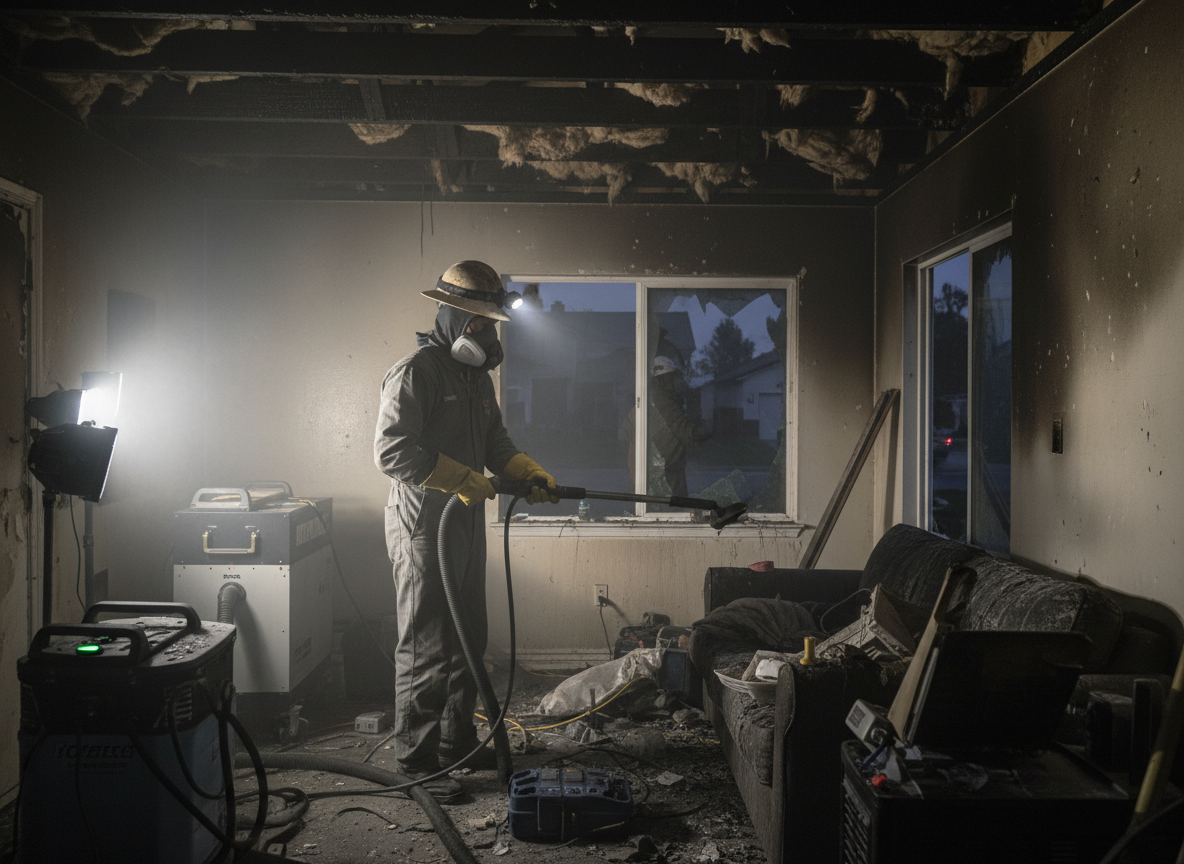
Porter Ranch homes built on the north edge of the San Fernando Valley often sit on sloped lots with stucco exteriors and older HVAC systems that pull smoke deep into ductwork. Hot dry summers and Santa Ana winds push embers and soot into attics and wall cavities faster than in flatter neighborhoods like West Porter Ranch. A 24 hour fire restoration crew must start negative air and HEPA filtration within hours to keep soot from bonding to the porous drywall common in 1980s and 1990s builds around Porter Ranch Town Center.
Mediterranean climate means low humidity most months, so charred wood and insulation dry quickly and release fine particles that travel through shared walls in townhomes near Sesnon Trail. Technicians check for hidden moisture from suppression water before it reaches the soil on hillside properties, which can shift during the first winter rains. Content cleaning happens on site when possible because replacement timelines stretch when sourcing materials from suppliers in Northridge or Chatsworth.
Los Angeles County codes require permits for any structural member replacement after fire, even in single-story ranch homes. Crews document every layer removed so insurance adjusters see the actual char depth instead of surface claims. Odor neutralization uses thermal fogging calibrated for the tight insulation packages found in newer West Porter Ranch developments, preventing re-sooting after the first hot spell.
Technician insight
In Porter Ranch the thing that catches most people out with 24 hour fire restoration is how fast soot travels through the shared attic spaces in homes built on the slopes above Rinaldi Street. The dry summer air lets particles settle deep before you even smell them, and once they hit the insulation you have to pull far more than the burn area suggests.
Attic Soot Migration After Kitchen Fire
A kitchen flare-up in a Porter Ranch home sent smoke into the attic shared with the neighboring unit. Inspection showed fine soot already inside the HVAC returns and settled on insulation batts. Crews isolated the system, performed negative-air cleaning, and replaced contaminated insulation before the next Santa Ana wind event could redistribute particles.
How it works
- 1
Emergency Board-Up
Secure openings and tarps within the first hours to prevent weather intrusion on exposed structures near Sesnon Trail.
- 2
Soot and Smoke Assessment
Test surfaces and HVAC runs for pH levels and particle penetration common in dry Porter Ranch summers.
- 3
Water Extraction and Drying
Remove suppression water before it migrates into hillside soil or under slabs in older homes around Porter Ranch Town Center.
- 4
Cleaning and Odor Removal
HEPA vacuum, wash, and fog affected materials while monitoring for recontamination in low-humidity conditions.
- 5
Rebuild and Final Clearance
Replace damaged sections, restore systems, and verify air quality before turnover to the homeowner.
Pricing
Upfront quotes provided after on-site assessment; final cost depends on square footage affected, HVAC involvement, and whether structural members require replacement.