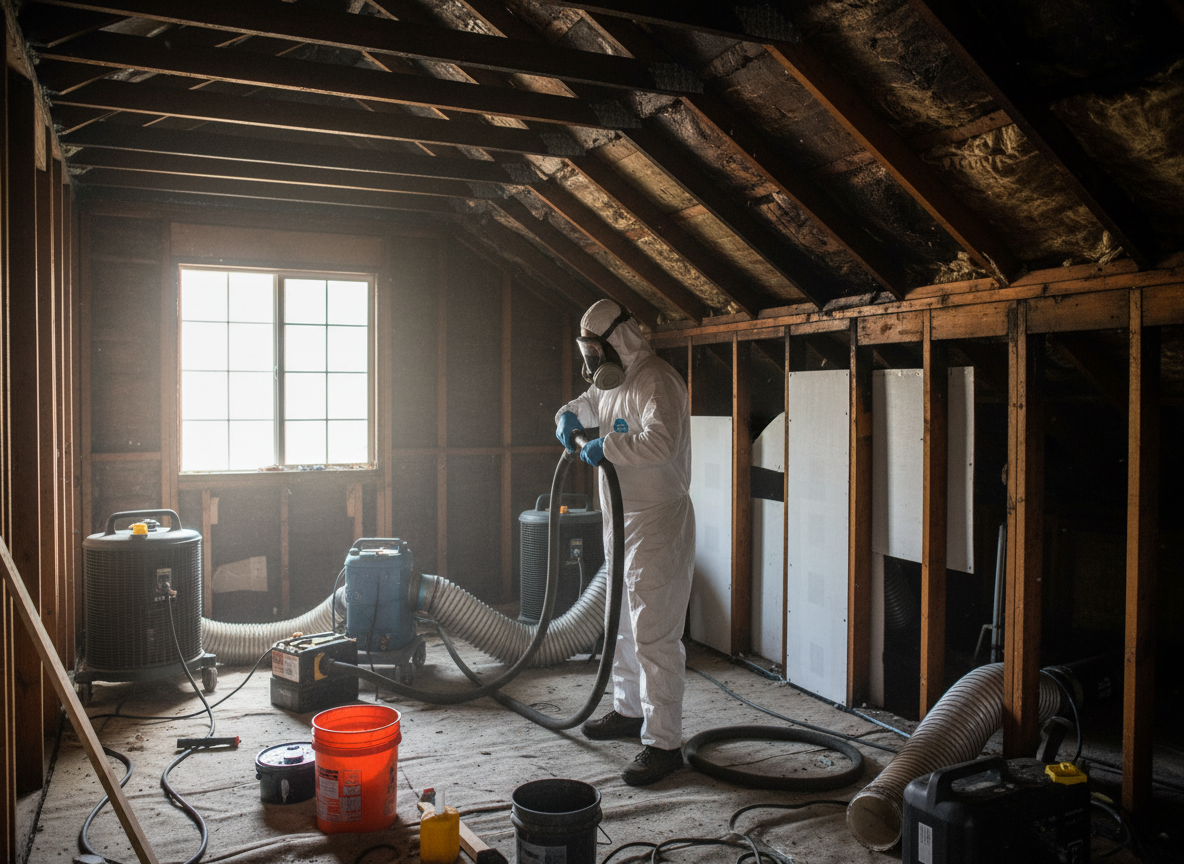
Fire Damage Restoration Porter Ranch teams based at 19765 Rinaldi St respond directly to San Fernando properties when embers from the surrounding hills ignite roofs during the hot, dry summers. Crews navigate narrow residential streets off Maclay Avenue to reach older single-family homes built mid-century, where wood framing and plaster walls often hide smoke residue that standard cleaning misses. Immediate board-up and air scrubbing prevent further damage from the area’s frequent Santa Ana wind events.
Work in San Fernando focuses on ash removal from flat lots that slope toward the Pacoima Wash, where runoff can carry soot into neighboring yards. Technicians use specialized HEPA equipment suited to the tight setbacks common on streets like Eighth Street and Harding Avenue. Because the neighborhood sits in the San Fernando Valley’s Mediterranean climate, summer humidity spikes after fires create ideal conditions for mold on water-damaged drywall, requiring same-day drying protocols.
Homeowners along San Fernando Road and near Brand Park receive priority scheduling because access routes from Porter Ranch via the 118 freeway stay open even during regional fire events. Every job starts with an on-site inspection that accounts for the mix of stucco and wood exteriors typical in this ZIP.
Around San Fernando
We regularly work near:
- 📍Maclay Avenue
- 📍San Fernando Road
- 📍Brand Park
- 📍San Fernando Mission
- 📍Pacoima Wash
- 📍Eighth Street
Fire Damage Restoration Porter Ranch in San Fernando — Local Notes
- •Mid-century wood-frame homes on narrow lots off Maclay Avenue require smaller extraction units and hand-carry methods to reach interior walls without damaging adjacent properties.
- •Ash and soot from nearby hillside burns frequently settle in the Pacoima Wash drainage corridor, so crews test soil-adjacent foundations for embedded particulates before final clearance.
- •Hot, dry summers extend the window when embers can re-ignite, so exterior wetting and roof inspections are performed first on every San Fernando call.
- •Older plaster-and-lath construction common along Harding Avenue traps smoke odor deeper than modern drywall, demanding longer ozone and thermal fogging cycles.